
*Bee-friendly urban planters in partnership with Cardiff University's Pharma Bees
*Bee-friendly urban planters in partnership with Cardiff University's Pharma Bees
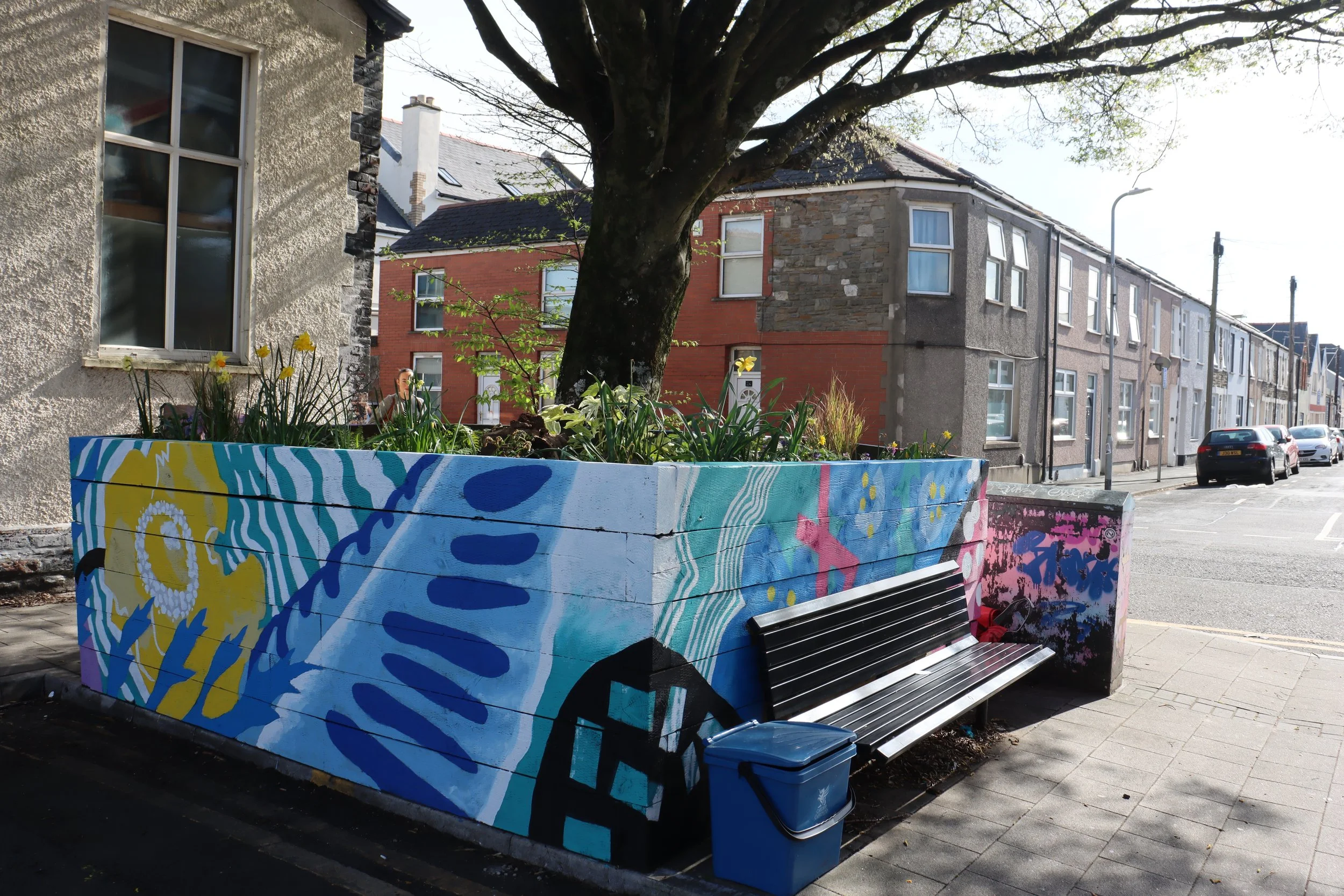
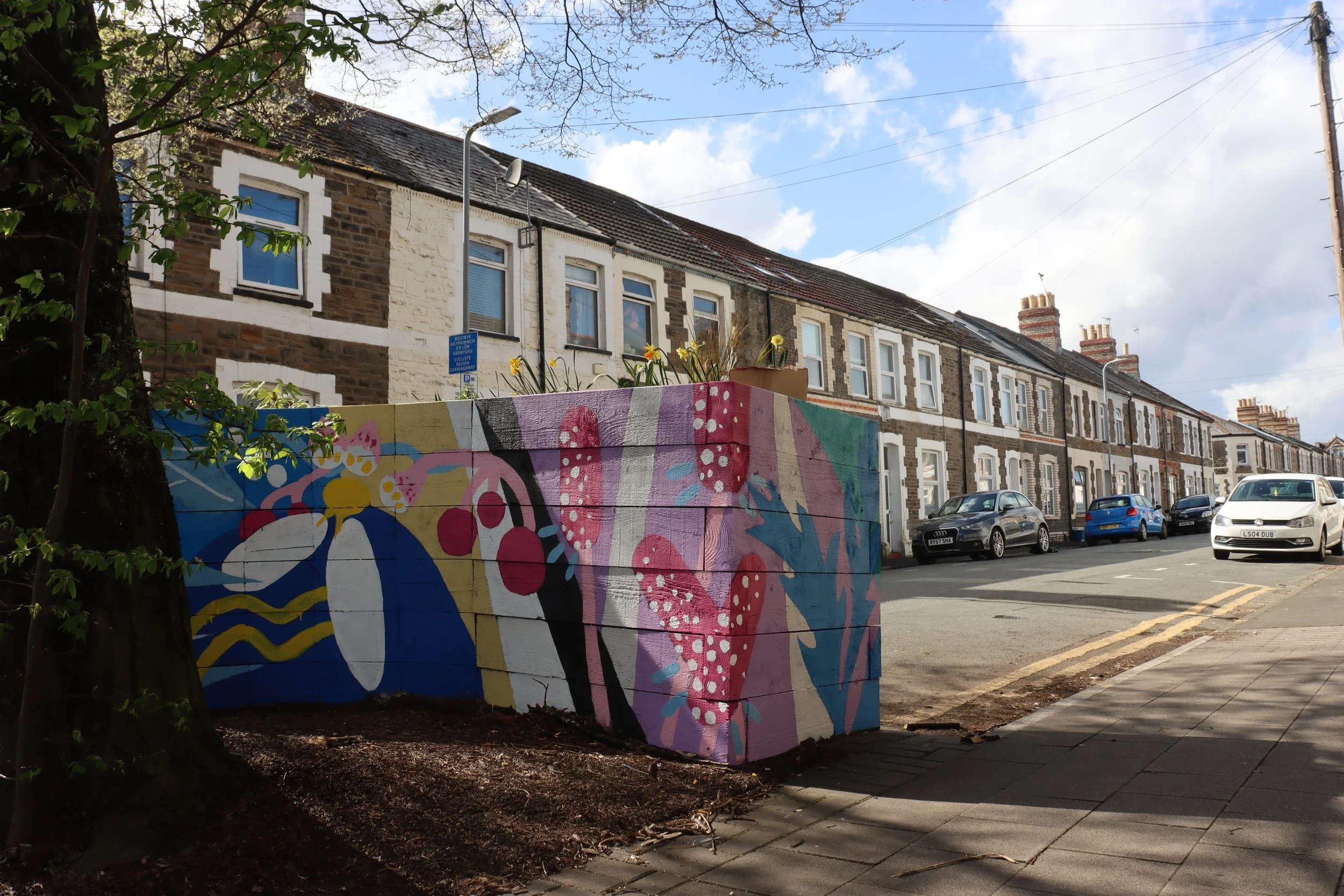
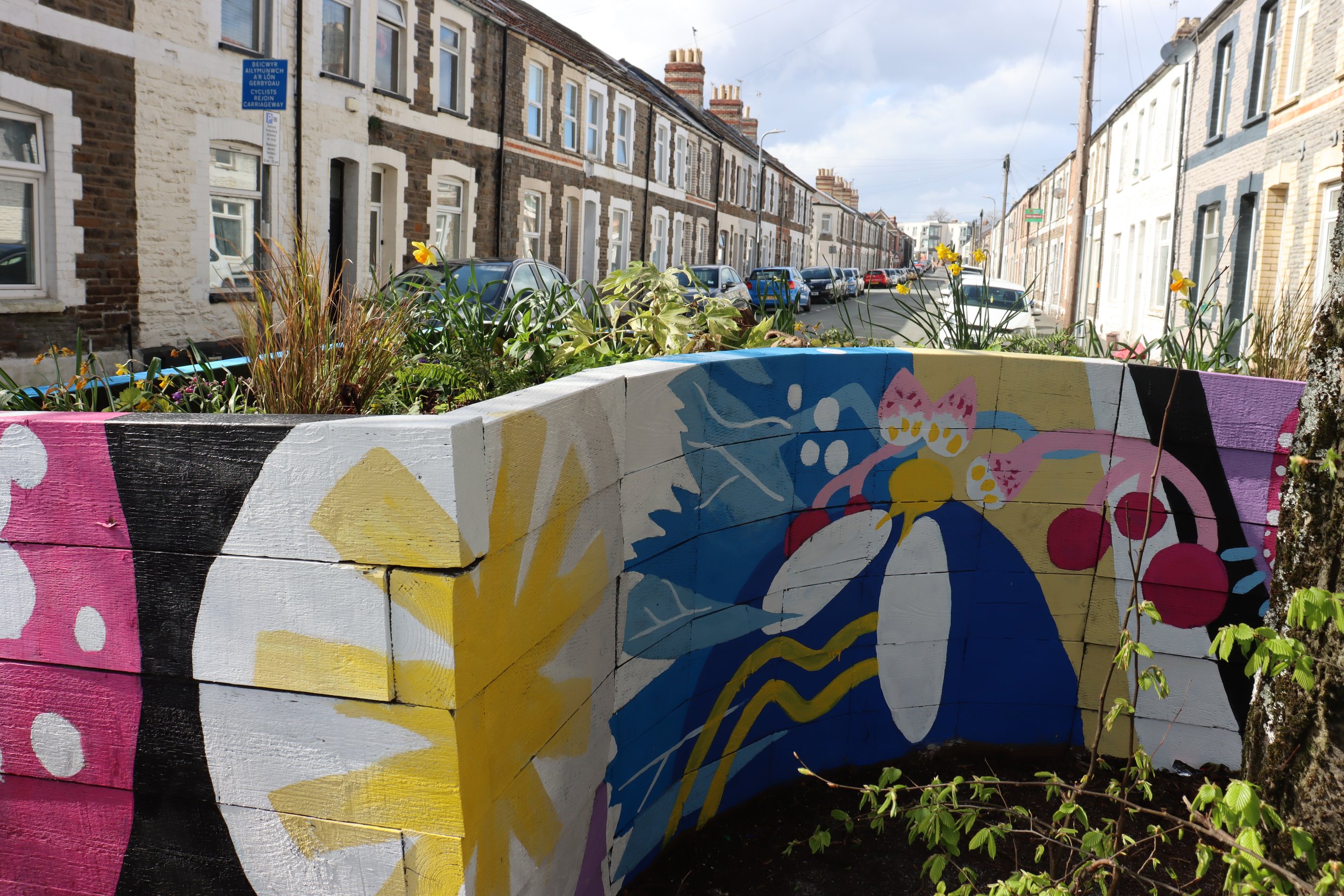
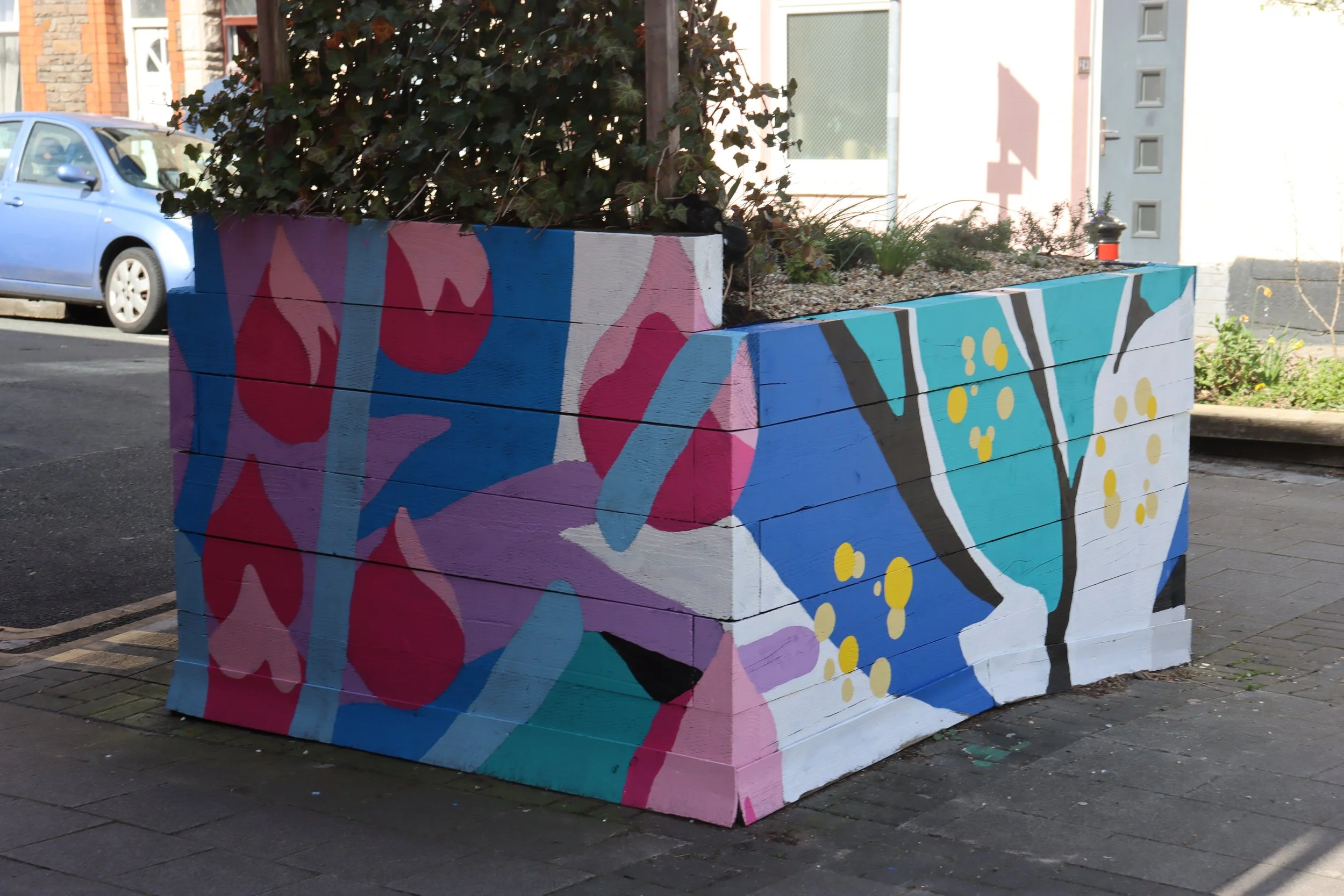
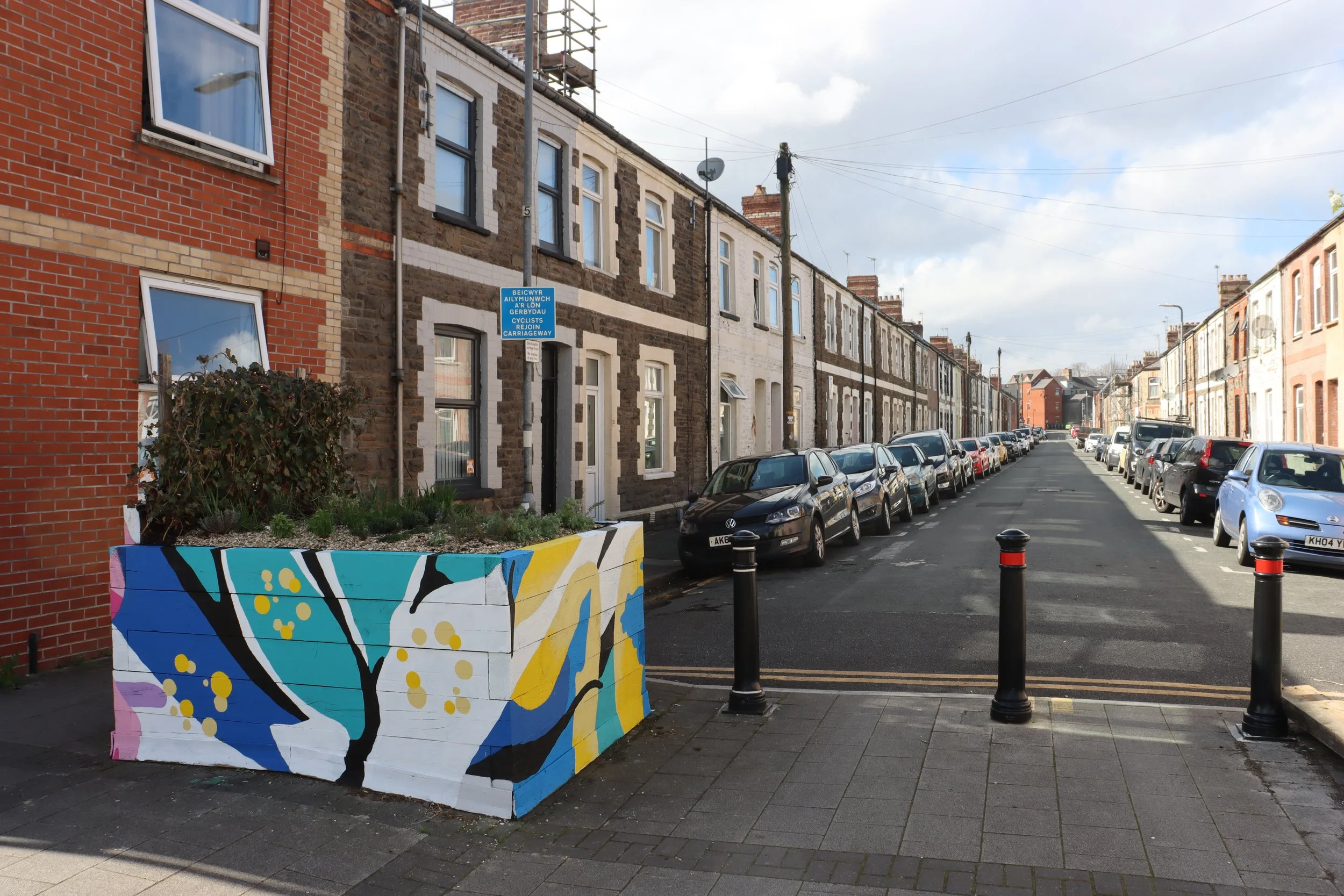
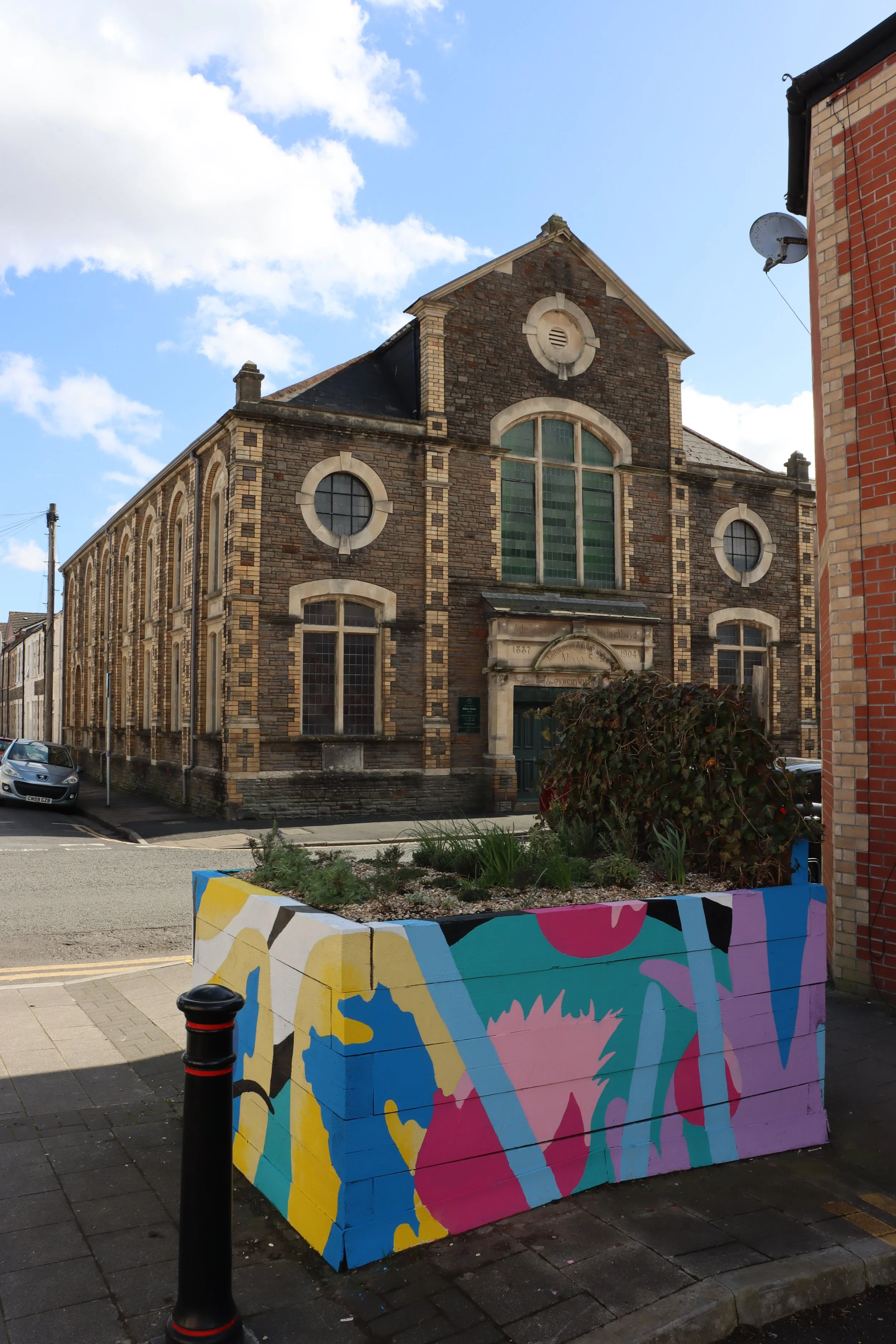
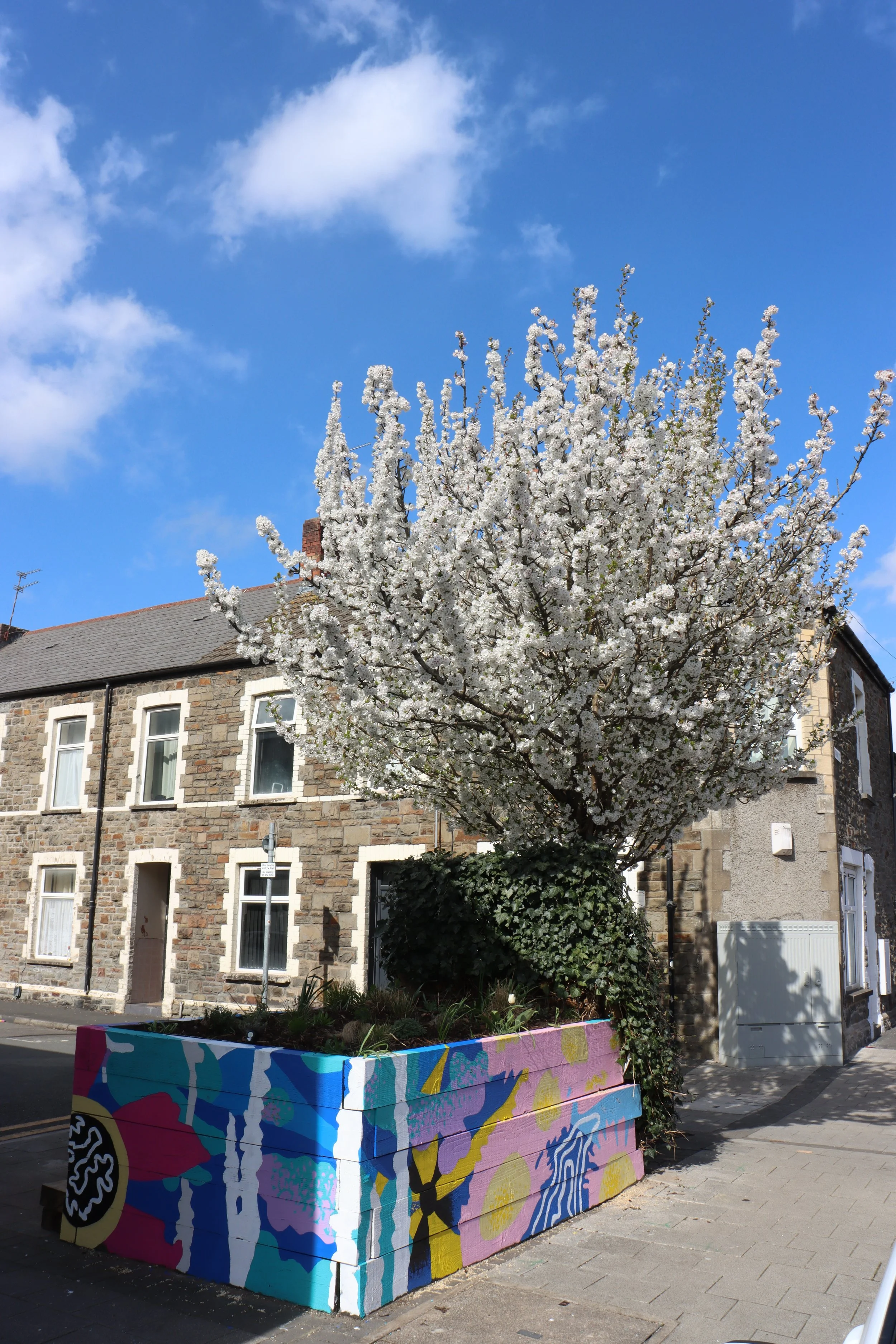
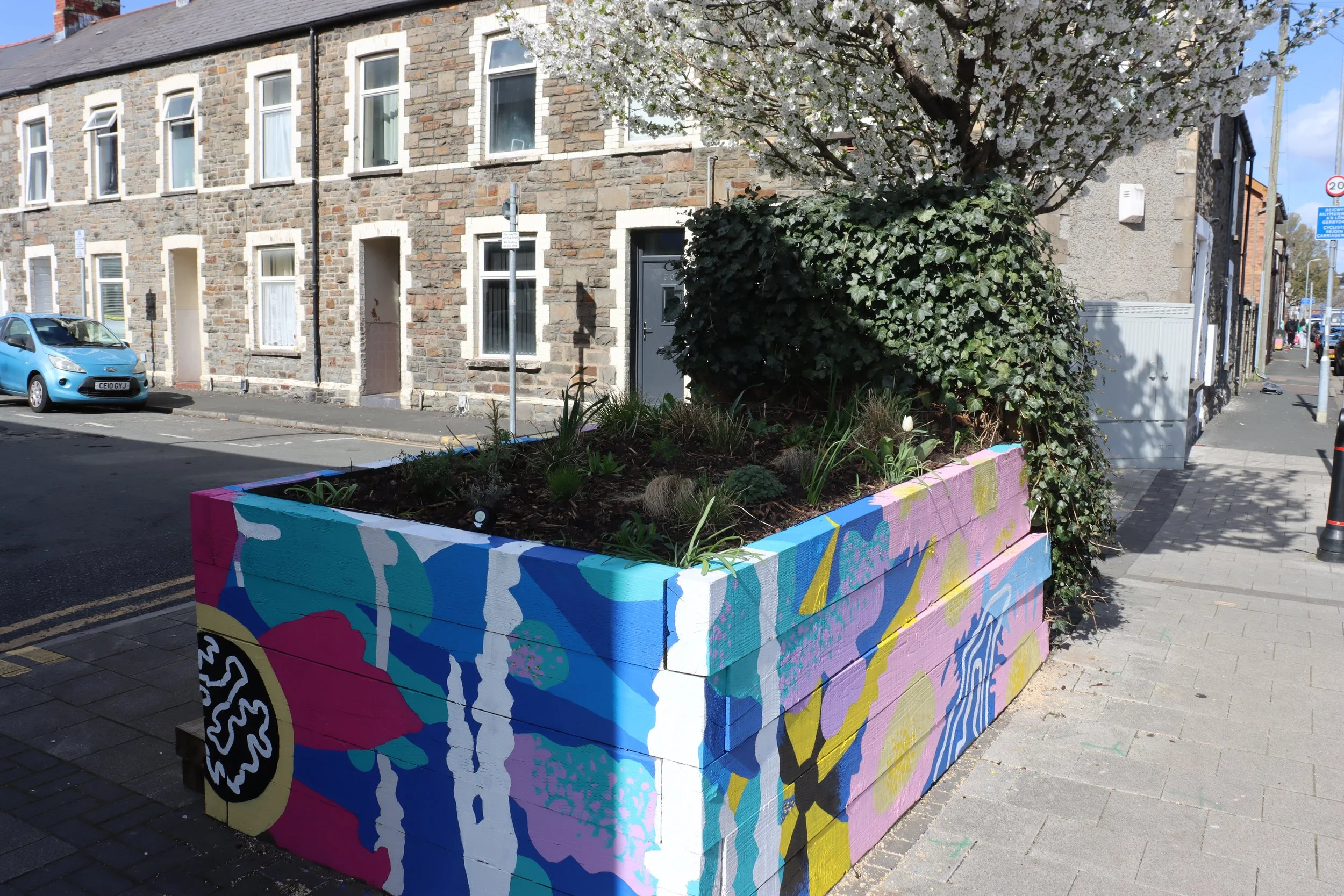

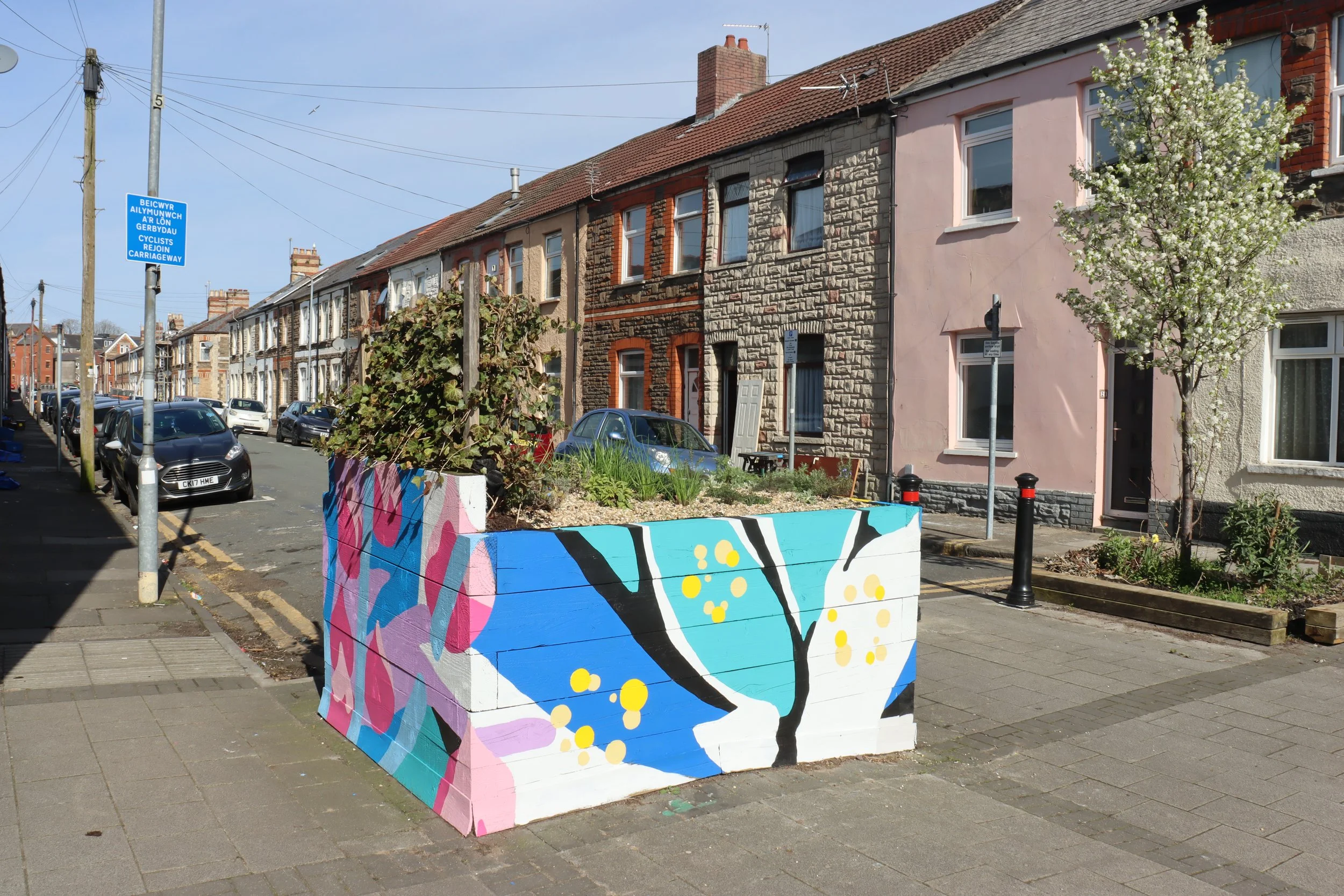
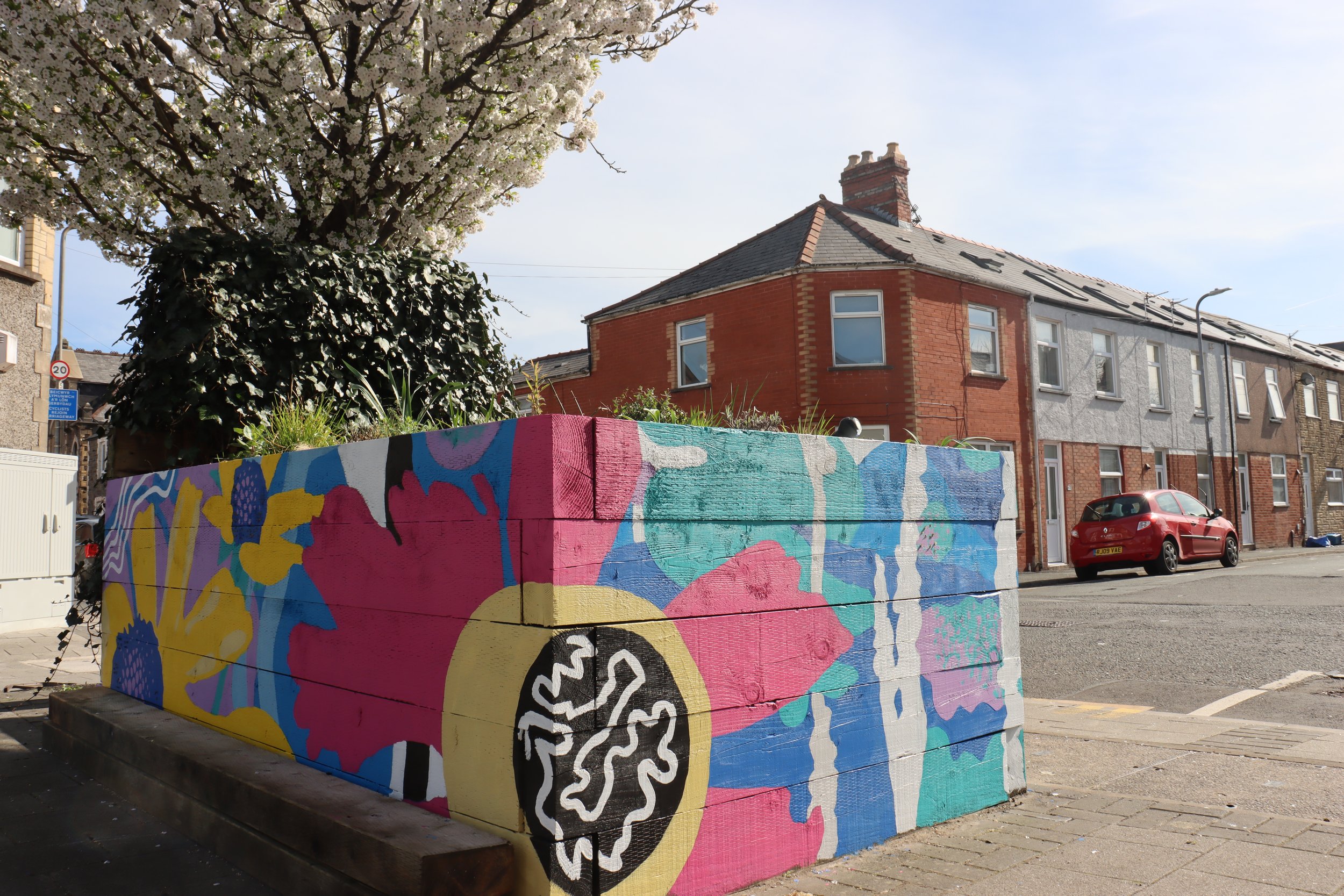
Greening Cathays – Urban Planters
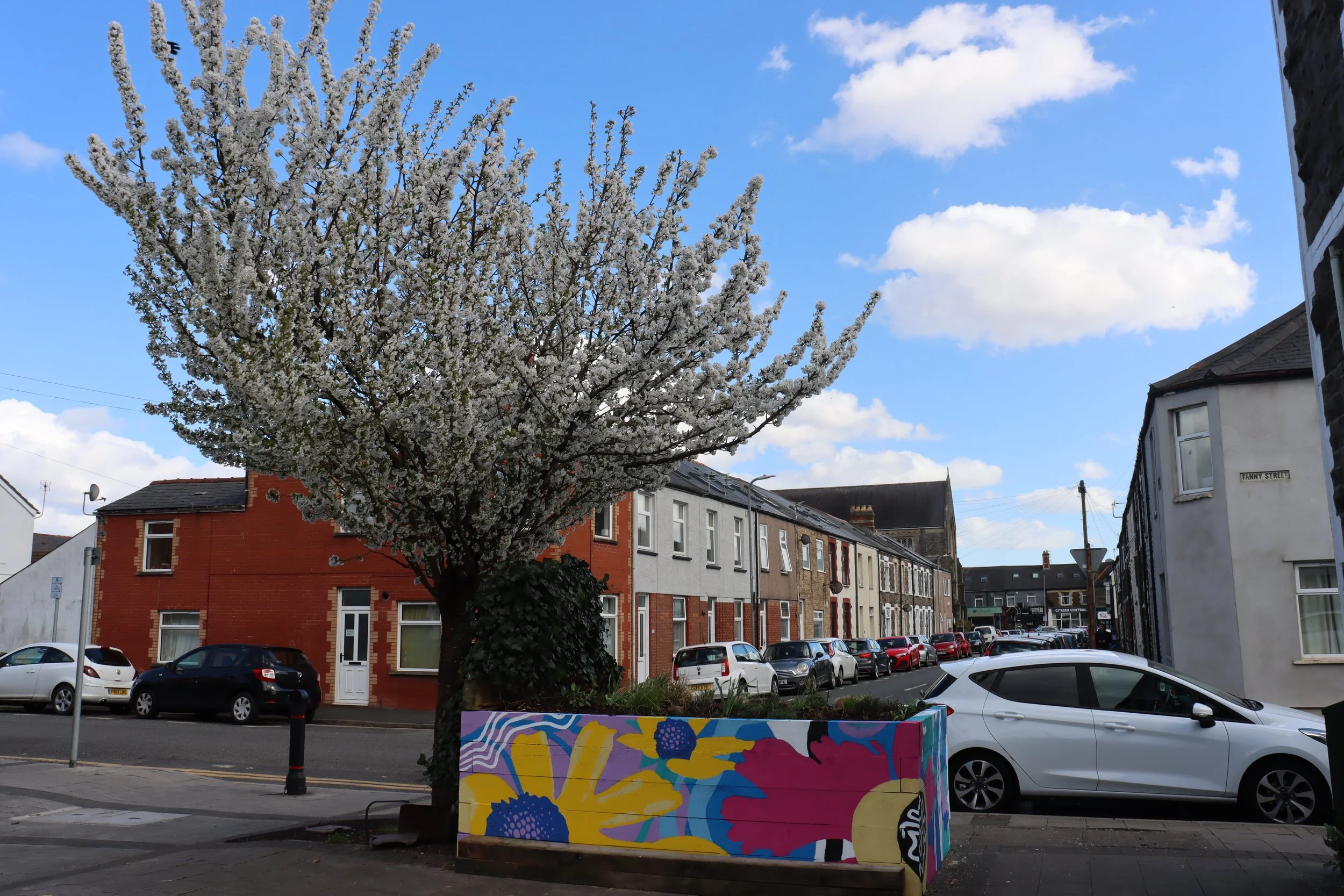
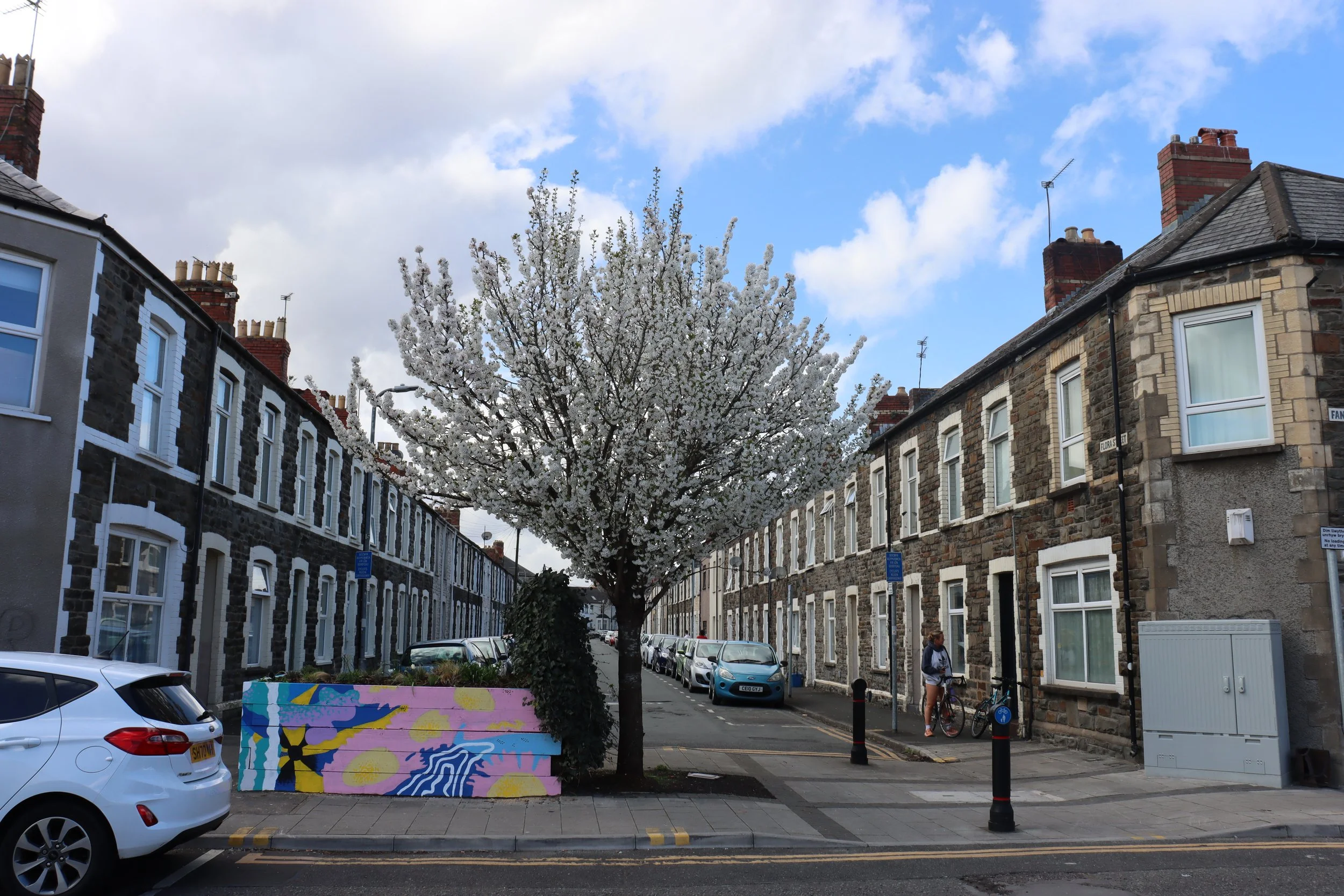
Greening Cathays was delivered as part of the PharmaBees initiative, a Cardiff University-led programme exploring how urban spaces can support pollinators while strengthening community connection. The project responded to local research highlighting challenges in Cathays including transiency, low social cohesion, and a lack of connection to place. The aim was to introduce small-scale interventions that could improve both the street environment and people’s relationship with it.
Client and Context
Commissioned by Cardiff University as part of a series of projects, the brief was to create urban planters that were not just decorative, but functional for biodiversity and meaningful within a transient urban setting.
Collaboration
This was a collaboration with Elin Barker, Deputy Head Gardener at St Fagans National Museum of History. Elin led on planting design, developing a bee-friendly scheme grounded in ecological value and long-term resilience. I led on the visual design and delivery of the planters, ensuring they worked as public-facing interventions within the street.
Design Approach
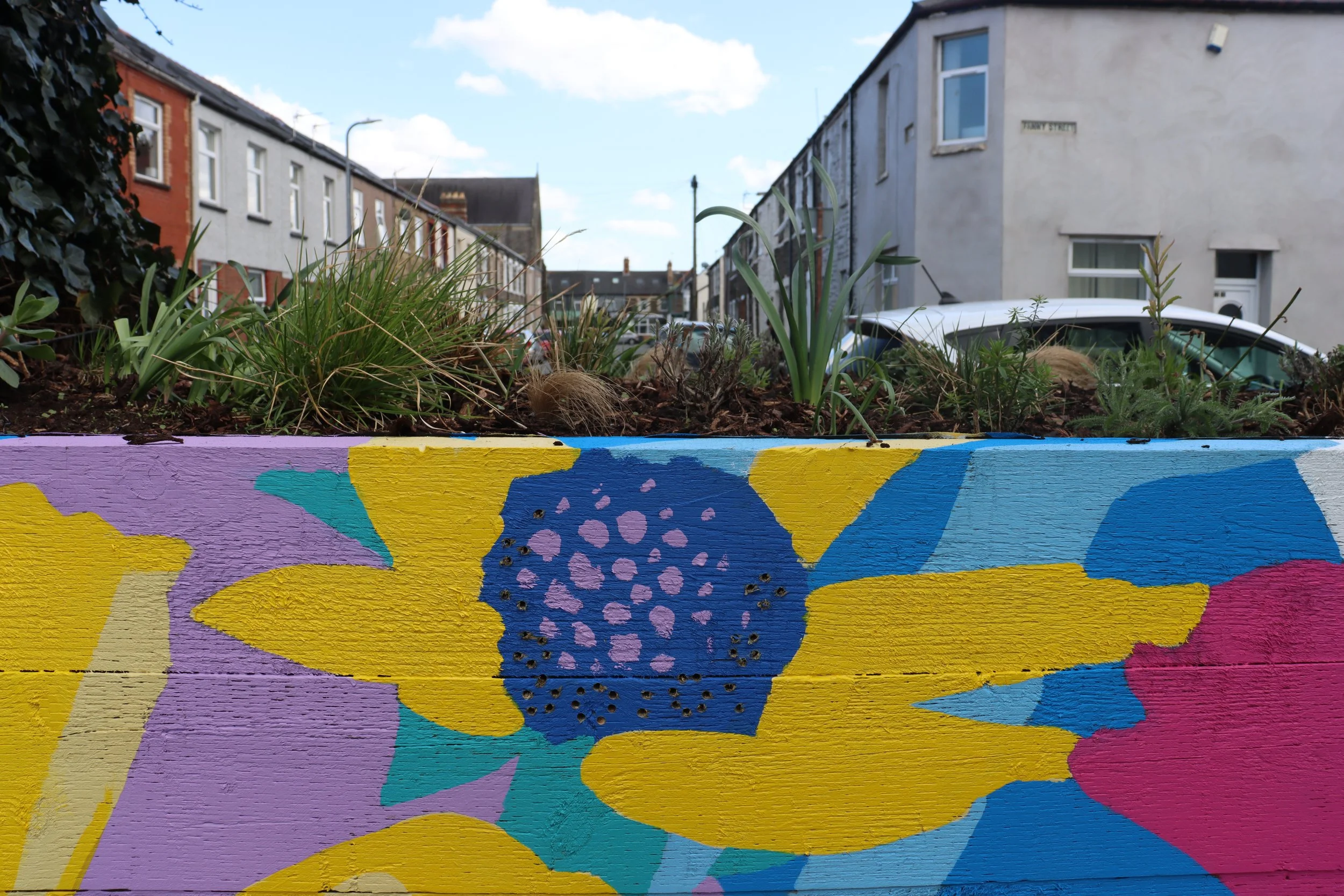
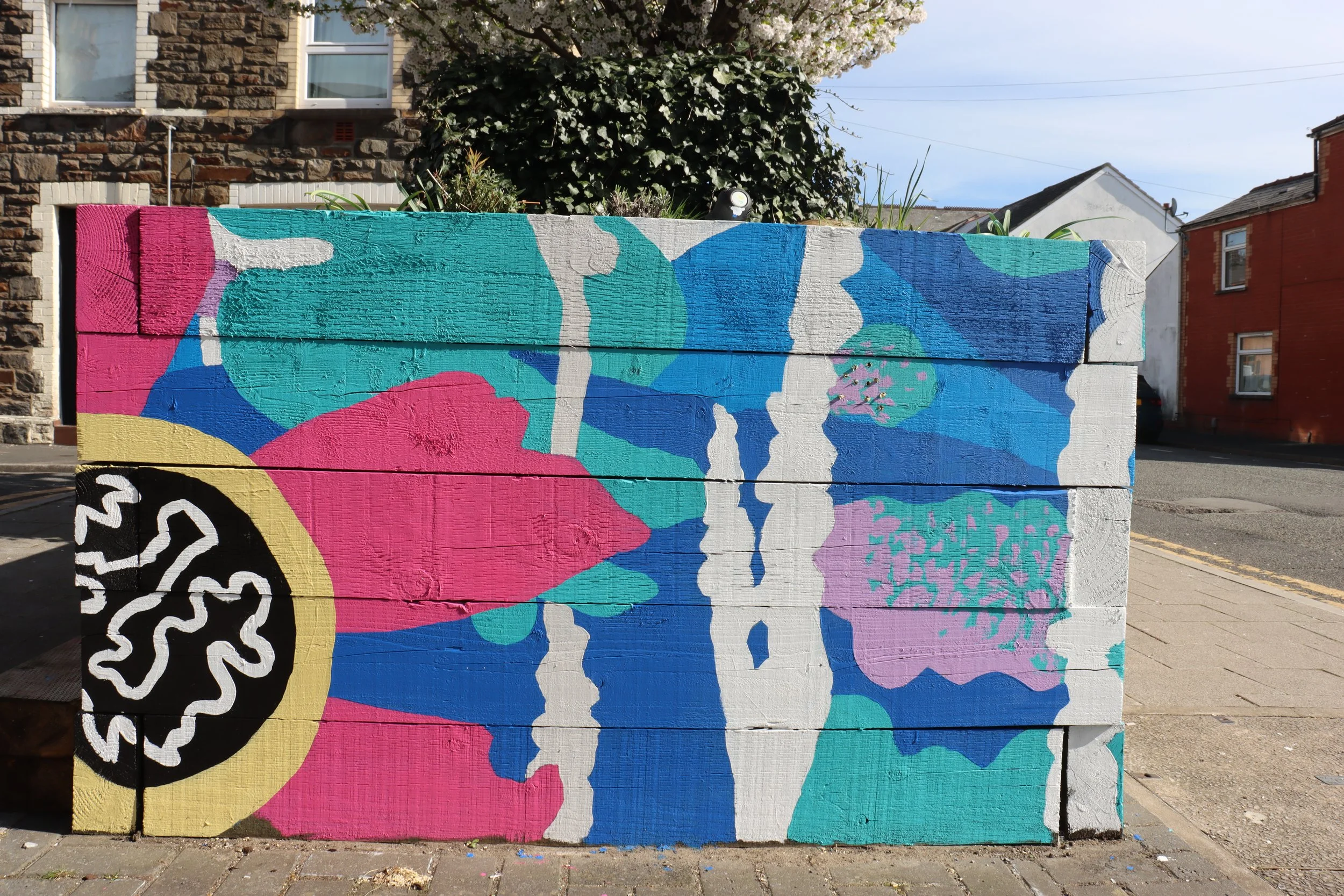
The visual design was developed to reflect and reinforce the planting rather than sit separately from it. Bright, simplified forms were used to echo the shapes of bee-friendly flowers included in the scheme, creating a direct relationship between the surface design and what grows within each planter.
Colour selection was informed by the spectrum visible to bees, using tones that align with how pollinators perceive flowers. This adds another layer of intent, linking the visual language not just to human perception, but to the species the project is designed to support.
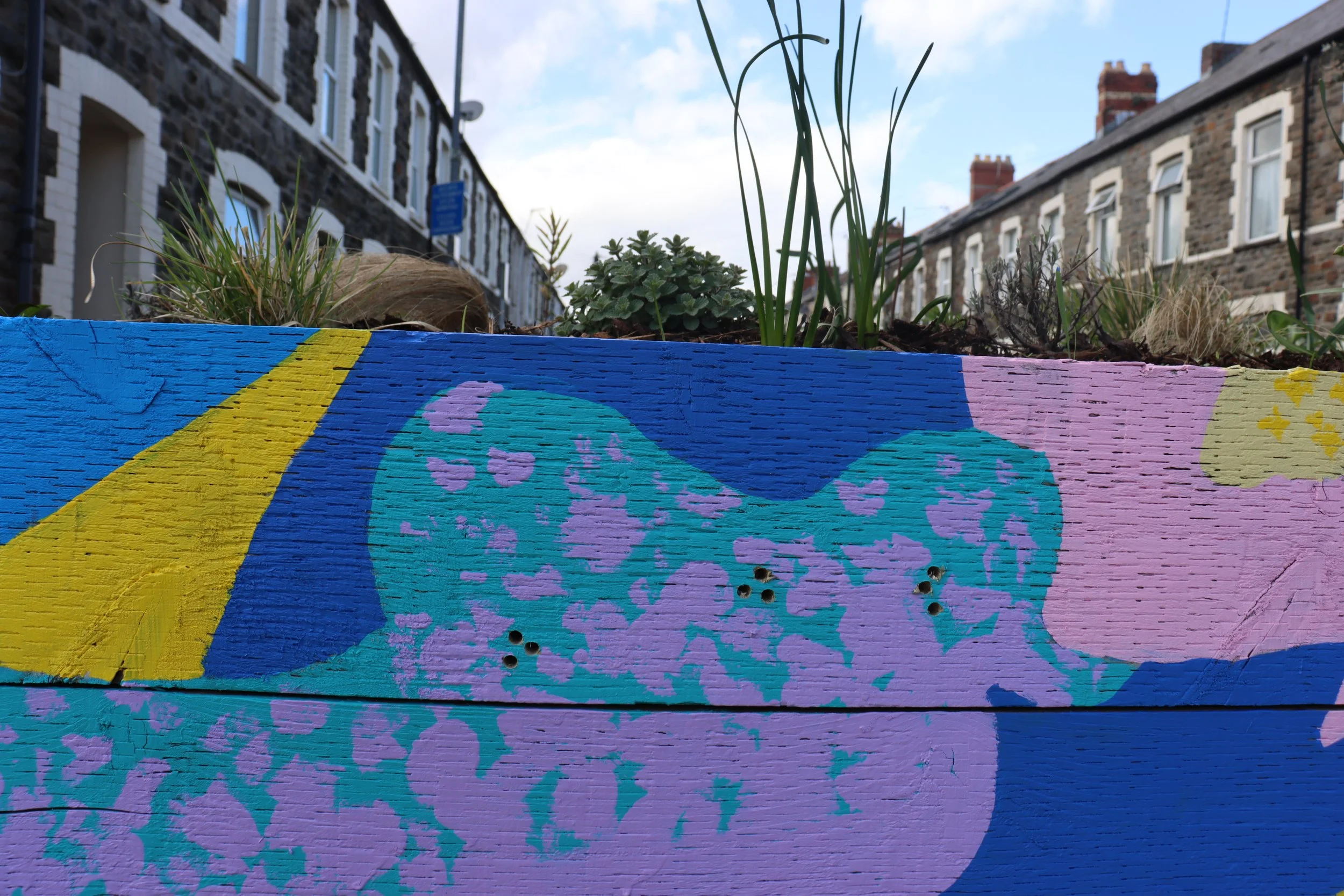
The planters were also adapted physically to support biodiversity. Small drilled openings were incorporated into the timber structure to provide additional nesting opportunities for solitary bees, extending their function beyond planting alone.
Planting Strategy
The planting focused on pollinator-friendly species that provide nectar and pollen across the seasons.
Given the constraints of a city centre environment, the scheme prioritised resilience. Planting needed to tolerate drought, pollution, and low maintenance while still delivering ecological value.
Outcome
The planters improve the immediate street environment while contributing to urban biodiversity.
More importantly, they act as small anchors within a transient neighbourhood, encouraging care, interaction, and a stronger sense of place. The project demonstrates how even modest interventions can begin to address both ecological and social challenges in urban areas.